
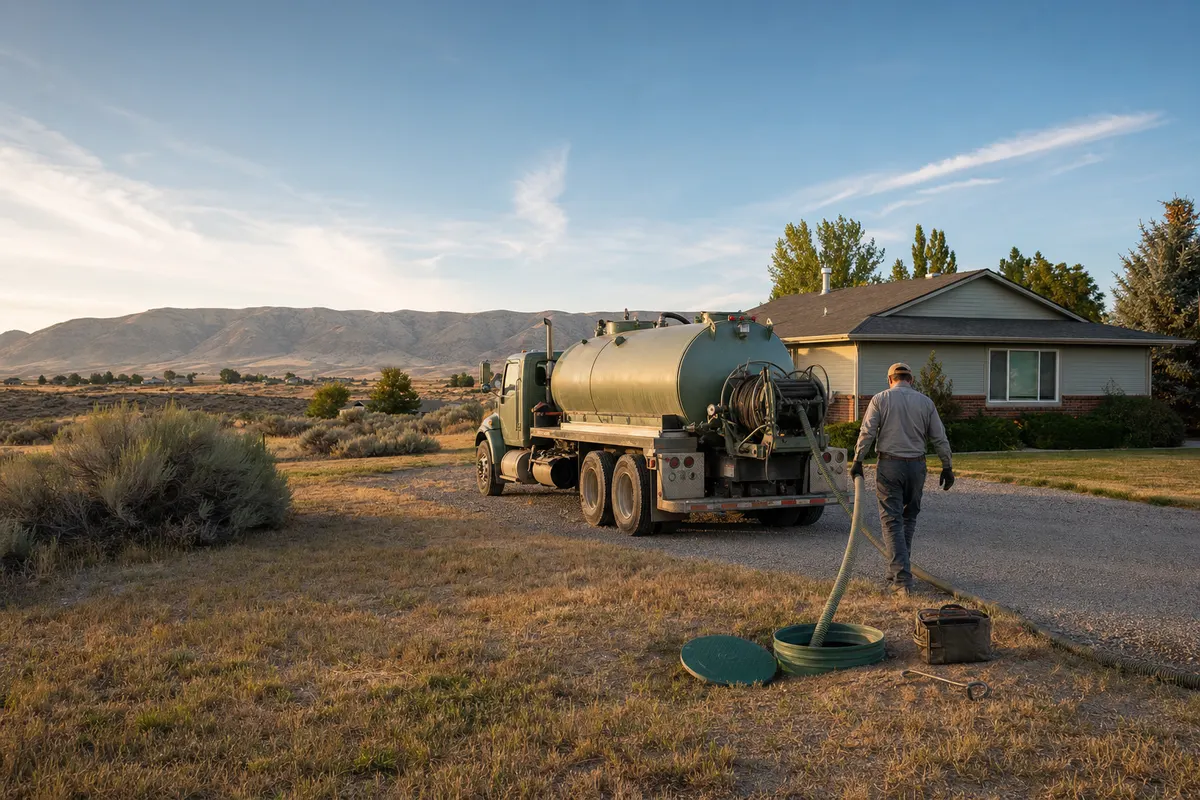
Pocatello · Chubbuck · the acreage ring
Septic tank pumping in Pocatello, Idaho
The city sewer ends where the good lots begin. Out here your tank is the whole system - we pump it on schedule, tell you honestly how it looks, and put the price in writing before the truck leaves the yard.
What we do
One outfit for the whole system
Pumping is the core of it, but a tank never fails alone. Each of these is its own job, priced its own way - click through for the straight version of each.
Tank cleaning
A pump-out removes what flows. A cleaning scrapes down the walls, rinses the baffles, and checks the filter - what an older or neglected tank actually needs.
Cleaning, explained →Repair & drain fields
Cracked lids, failed baffles, sunken risers, and the soggy-stripe drain-field problems this valley's rocky benches and river-bottom water tables produce.
Symptoms and fixes →Inspections
Buying or selling on septic? A real inspection with sludge depths and photos - before the offer, not after the surprise.
What we check →Emergency pumping
Sewage in the shower drain or an alarm at midnight. What to stop doing right now, and how fast a truck can actually get there.
Backup triage →Pricing
Typical 2026 numbers for Pocatello pump-outs, cleanings, and inspections - published, not hidden behind a "free estimate" runaround.
See the ranges →Grease traps
Interceptor pumping on a compliance schedule for Pocatello restaurants and kitchens - documented, so the health inspector conversation is short.
For commercial kitchens →Septic service near me covers more than the pump-out
One number handles the whole life of the system. Routine septic tank service, meaning a pump-out on the schedule your household actually needs. A full cleaning when an older tank has crusted walls. Inspections for a sale or a worry, and for the times an inspection earns its fee with no sale coming. Repairs on baffles, lids, and drain fields. Grease trap pumping for kitchens in town, and the emergency truck when it backs up. For a camper or a rig someone lives in, RV holding tank pumping empties the black and gray tanks where it is parked. If it keeps backing up, our guide to telling a blocked house line from a full tank or a drowned field reads the pattern behind it. A kitchen unsure what its drains run through can start with telling an indoor grease trap from an interceptor.
Why the valley is septic country
Sewer stops at the bench. We don't.
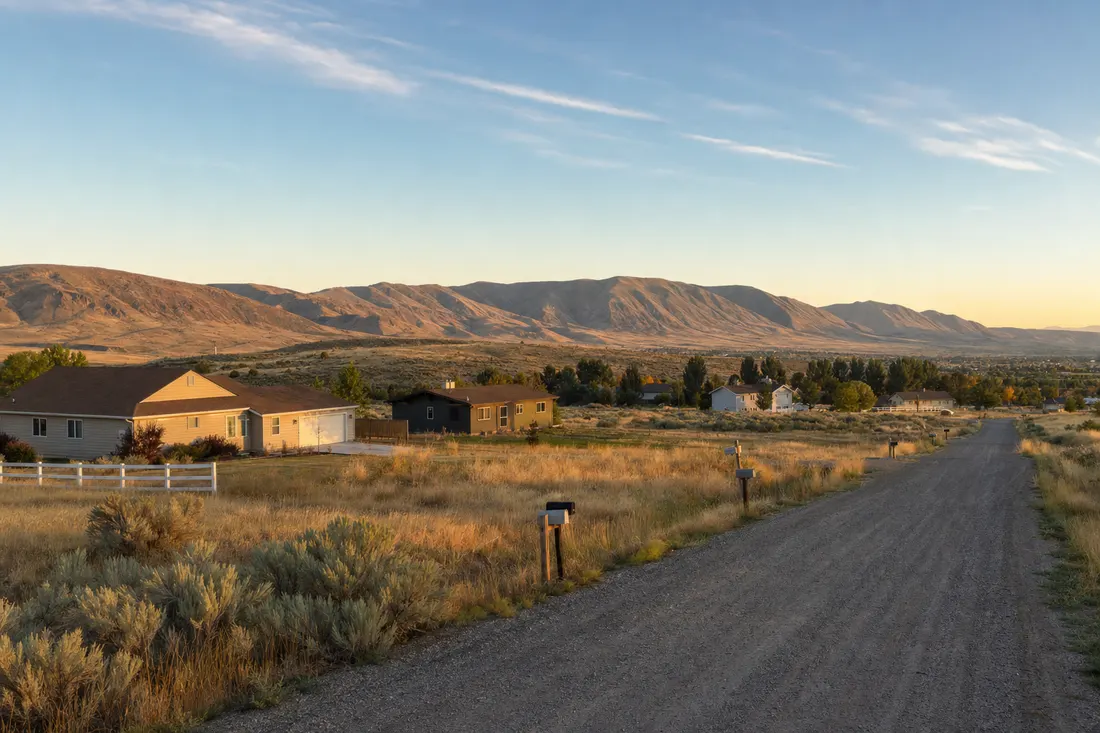
Pocatello's sewer map tells the story: the grid covers the valley floor, and everything climbing out of it runs on septic - the Johnny Creek and Gibson Jack benches, Mink Creek, the lots off Pocatello Creek Road, Tyhee and the north acreages toward Fort Hall, and the I-15 towns south to Inkom, McCammon, Arimo, and Downey. Listing one of those places? Our guide to selling a house on septic in Idaho lays out the order the septic work has to happen in before the sign goes up. If your own house sits near the edge of that grid, checking whether a house is on septic or city sewer takes a utility bill and a walk around the yard.
The ground out here is honest but not gentle. Bench lots sit on rocky, fast-draining fill where drain lines were blasted or picked into place; river-bottom lots near the Portneuf hold water high in wet springs. Both work fine - as long as the tank is pumped before solids reach the outlet and start pushing into the field. That schedule, not luck, is what a septic system runs on.
Winter matters too. Once the ground freezes and the snow settles in, finding and opening a buried lid becomes real work. The smart money in this valley pumps in fall - we will tell you plainly whether yours can wait for spring. If you are wondering whether the tank itself can freeze, our guide to what actually freezes first on a septic system walks the order, from the shallow line out of the house down to the field.
Septic pumping near me, from Chubbuck to Downey
Septic tank pumping from us reaches the lots the city sewer misses. Chubbuck and the north acreages out to Fort Hall, every bench lot above the valley floor, the I-15 towns down through Inkom and McCammon to Downey. American Falls and Lava Hot Springs are a longer drive, with the travel quoted up front in the price. Whoever backs up to your tank holds the Idaho DEQ pumper permit shown below.
How a visit goes
No mystery, no upsell script
Before
You get an exact price on the phone - tank size, access, and travel included. If you don't know the tank size, we quote the common case and confirm on-site before starting, not after.
During
Locate and open the lid, pump the full tank - liquids and solids, not a top-skim - and eyeball the baffles, inlet, and outlet while it's empty. That free look is where expensive problems get caught cheap.
After
You hear what we saw in plain words: how full it was, what shape the tank is in, and the honest year to call again. Written on the invoice so nobody has to remember.
How to pick between septic companies near me
Ask each outfit two things on the phone. Is travel inside the price they quoted, and will they pump the full tank or skim the liquid off the top? A top-skim is how a cheap quote stays cheap. If the tank has two lids, the question covers both, and our guide on whether every compartment gets emptied explains why the second one matters. Then, when the truck pulls in, ask to see the crew's Idaho DEQ pumper permit. We answer yes to both questions before you hang up, and showing the permit is part of the job.
Not sure when your tank was last pumped?
Tell us the address and roughly how many people live there - we can tell you in one call whether it can wait until fall or should not wait at all.
Questions we get on the phone
Pocatello septic questions, answered straight
How often should a septic tank be pumped around Pocatello?
Every 3 to 5 years for most households. A 1,000-gallon tank with two people stretches toward five; four or more people, a garbage disposal, or a rental with turnover pushes it toward three. If nobody remembers the last pump-out, that is the answer: it is due.
How do I find my septic tank lid?
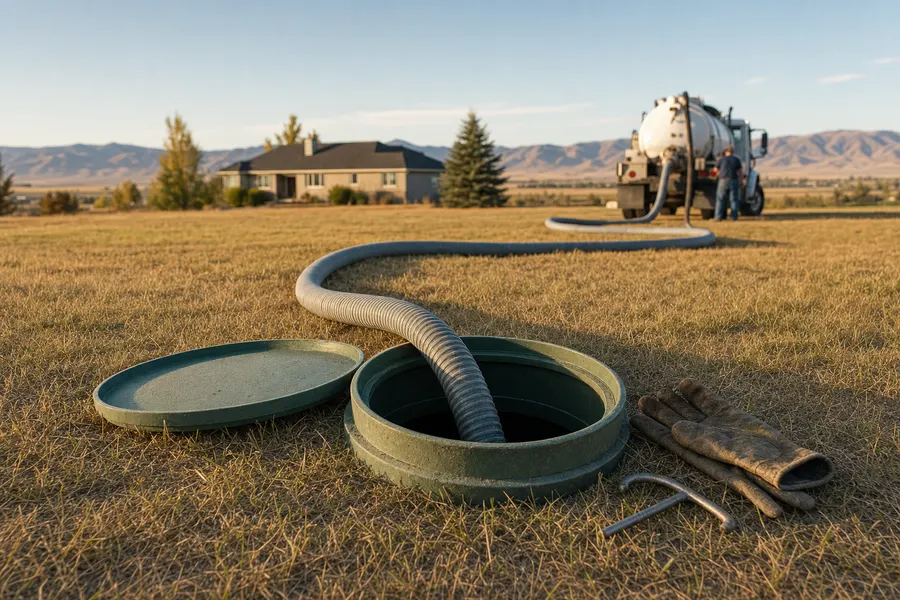
Follow the main sewer line out from the basement wall - tanks around here usually sit 10 to 20 feet from the foundation on the downhill side. If the lid is buried under sod or snow, we locate it as part of the visit and can set a riser so nobody has to dig for it again.
Do you serve Chubbuck and the areas outside city limits?
That is most of our work. Chubbuck, Tyhee, and Fort Hall to the north, the Johnny Creek, Gibson Jack, and Mink Creek benches, and the I-15 corridor south through Inkom, McCammon, Arimo, and Downey, plus American Falls and Lava Hot Springs.
What does septic tank pumping cost in Pocatello?
Most standard pump-outs around Pocatello run $275 to $475 depending on tank size and access. We publish typical local ranges on our pricing page and quote you an exact number on the phone before anything is scheduled.
Is the crew licensed?
Yes - Idaho requires anyone pumping septic tanks to hold a DEQ pumper permit, and every crew we send is on the state list. Ask for the permit when the truck arrives; showing it is part of the job.
Free straight quote
Tell us where the tank is. We’ll tell you what it costs.
Address or general area, how many people in the house, and when it was last pumped if you know. We call back with a real number - not a range that doubles once the truck arrives. Rather just talk? Call (208) 427-2504.
- The price you hear on the phone is the price on the invoice - gallons and travel included, no fuel-surcharge surprise
- If the honest answer is "your tank can wait two more years," that's what we say, and you keep your money
- Every crew sent to your place holds the Idaho DEQ pumper permit - ask and they'll show it